Fulbright Brazil Workshop (Part 2): Getting Dirty with Generative AI
Workshop, Virginia Tech Arlington Campus, 2026
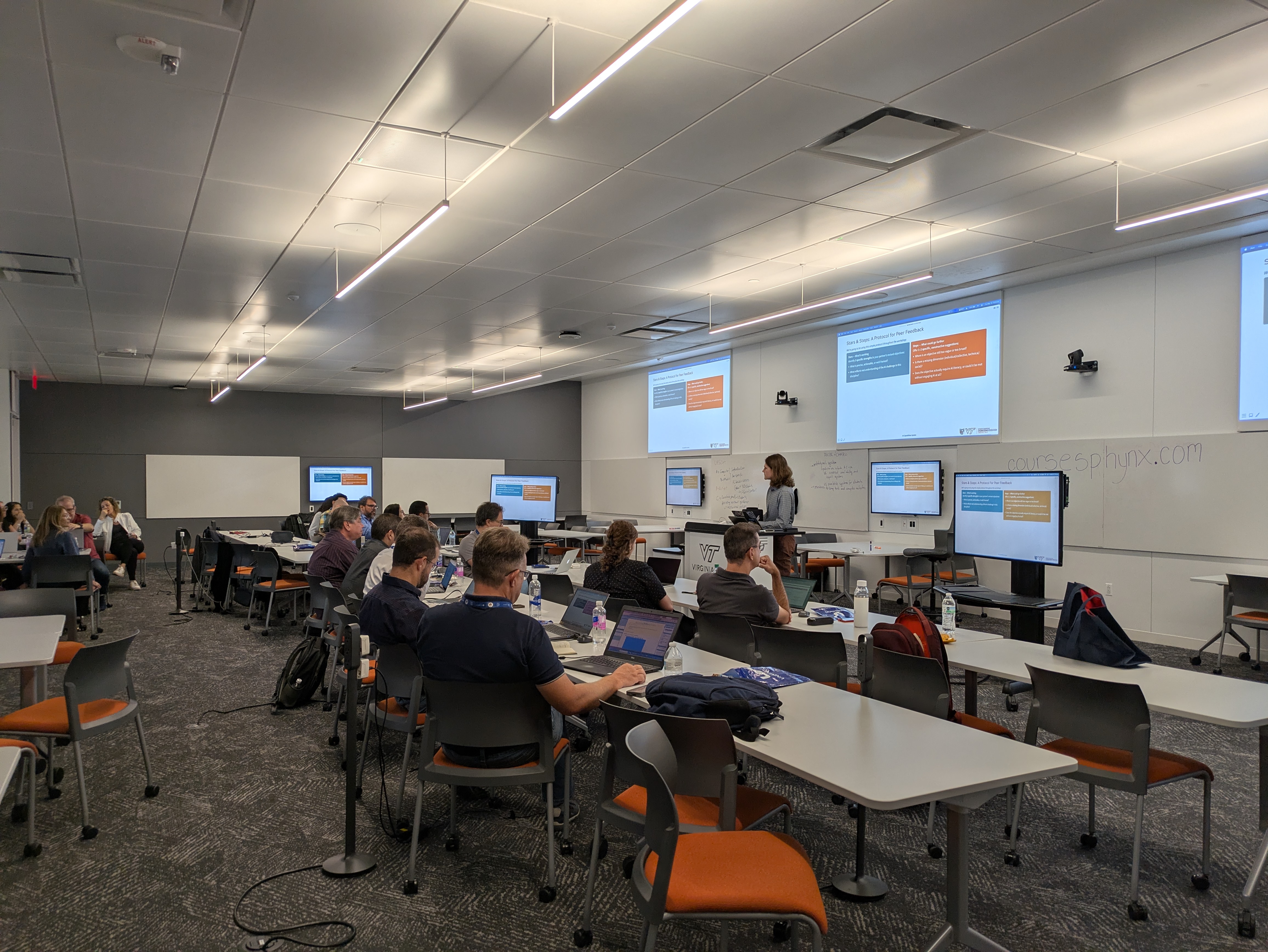
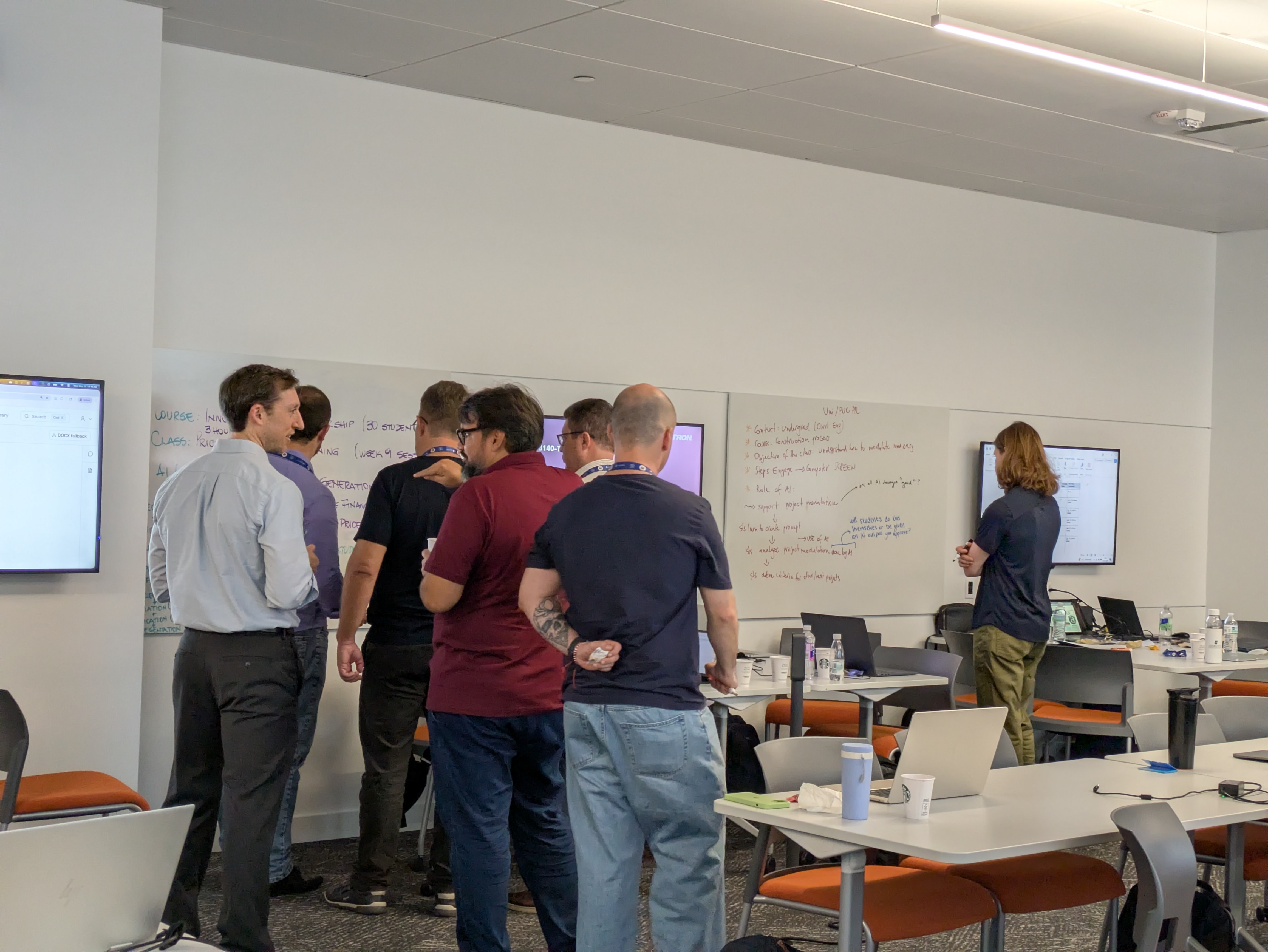
The second half of a two-part workshop with Fulbright Brazil cultivating AI literacy among Brazilian engineering faculty. Where the São Paulo session presented foundational content on AI systems, pedagogy, ethics, and higher education governance, this session “got our hands dirty” with the same material. Put another way, trading lecture-style teaching and short breakouts for prolonged discussions and collaborations so participants could identify actionable, specific AI supports for their own teaching and institutions.
May 18–21, 2026 · Virginia Tech Arlington Campus, Arlington, VA
Select Sessions Lead
- AI Capabilities Update (opens in a new tab): What’s Changed Since Fall 2025
- Pedagogy Challenges in the AI Era (opens in a new tab): Apply-Then-Consult
- What Could Go Wrong (opens in a new tab): Implementation Reality Check
The Moving Target Paradox
The through-line across both sessions was a problem that surfaced the moment we tried to design for a real audience: pedagogical developers encounter such different backgrounds, uses, and attitudes toward AI systems that it prevents them from providing meaningful guidance to wide audiences. Instead, faculty development must embrace context-specificity. Part 1 made this concrete when we arrived in Brazil with foundational content and adapted on the fly to include ranging institutional contexts and AI access levels. In this sense, the research was only so helpful when situated in context. This workshop, by contrast aimed to consider contextual variations, including:
- Access and infrastructure — differences in internet access, institutional license variations, commercial vs. institutional AI services
- Policy — AI more-or-less banned at some institutions, AI required in assignments at others
- Teaching context — small, moderate, and large class sizes; differing institutional teaching and learning supports; faculty transitioning to “student-centered” learning
- Beliefs and habits — “AI is cheating” vs. “AI is a collaborator”; “AI is faulty” vs. “AI is innovative”; faculty who publish on AI alongside faculty who have never read about it
A faculty development workshop has to hit many of these targets simultaneously, which raises questions about durability we’re still working on: How do we design workshops that help instructors use AI effectively when AI systems are rapidly evolving? How do faculty developers code-switch across ranging institutional contexts? How to both instructors and faculty developers accommodate changing student use? And which instructor needs do we prioritize when we can’t meet them all?
Presented As
This work was presented as a poster, Doomed by Design: The Moving Target Paradox of Faculty AI Development, at the 2026 NY Upstate DBER conference at Cornell, University.
Fulbright Brazil collaborators: Andrew Katz, Andreia Nascimento, Antonio Carlos Seabra, Bailey McOwen, Dayoung Kim, Kylee Sheikh, Luiz Loureiro, Ricardo Alexandre Diogo, and Taynara Barros.